ARMOR PLATES
↳
Ceramic and polyethylene hard armor plates, NIJ tested to Standard 0101.06 (RF1 and RF2 plates to 0101.07), made for plate carriers. Compare Level III plates, Level III+ plates and Level IV plates, plus side plates and sets of two.
SHOP BY ARMOR LEVEL
Not sure which protection level you need? Compare Level III, III+ and IV plates in the armor plates guide below, save with a Level IV set of two, or get a complete plate carrier with plates kit.


ARMOR SETS





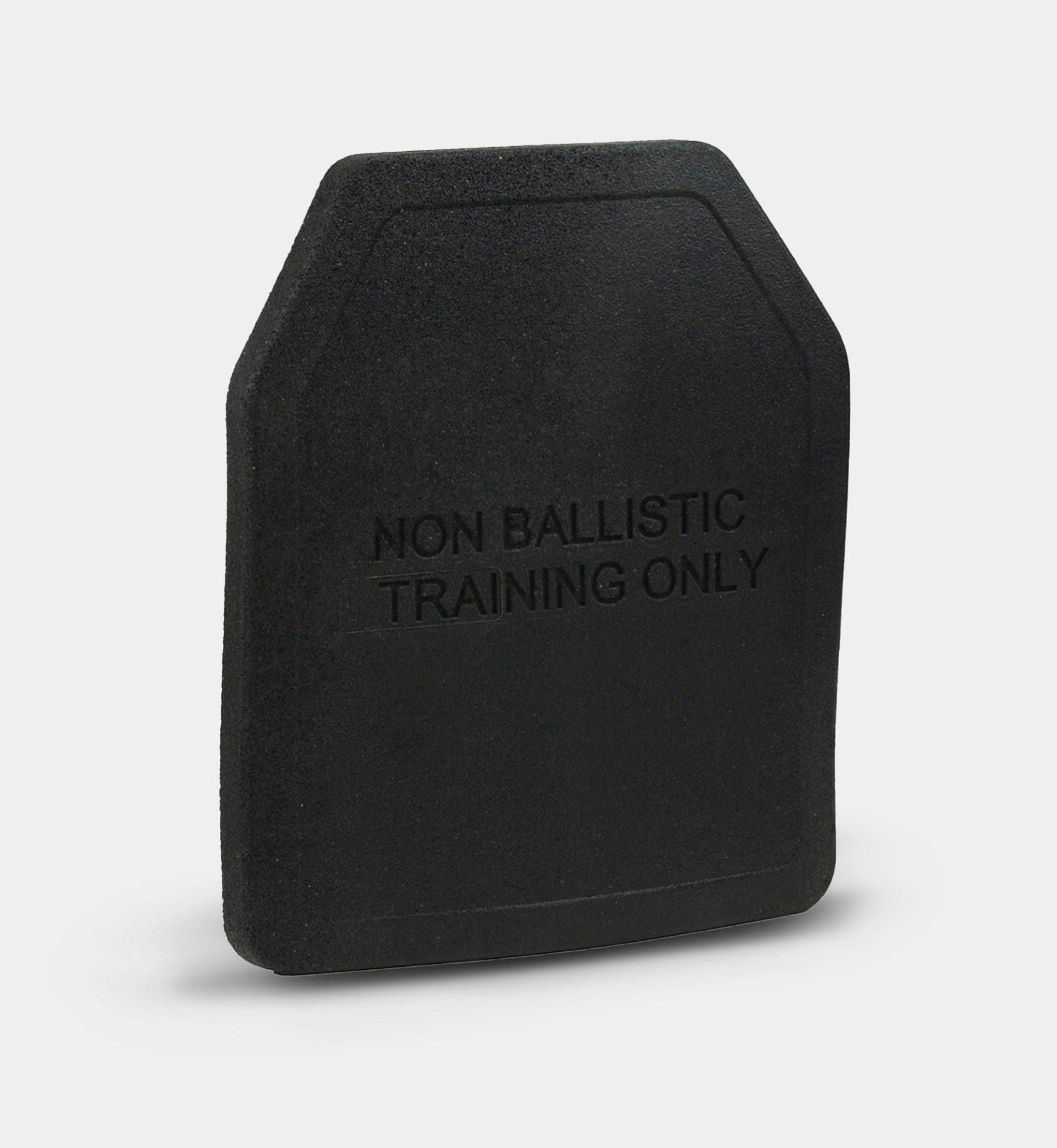





PLATE CARRIERS WITH PLATES
Carrier + rifle plates in one kit
A plate is only half the system. These kits pair an Ace Link plate carrier with rifle plates so you can get a complete setup in one purchase. You can also shop plate carriers and armor plates separately.


Ballistic armor plate test: Level III, III+ and IV plates against rifle threats:
Rifle rounds tested
Watch laboratory and range testing of Ace Link hard armor plates against rifle threats such as .308 / 7.62x51mm M80 ball and armor-piercing .30-06 M2 AP — the NIJ 0101.06 test rounds for Level III plates and Level IV plates.
Level IV ceramic plates
Level 4 plates use a ceramic strike face backed by UHMWPE to defeat armor-piercing .30-06 M2 AP as stand-alone plates, at about 6.1–6.9 lb per 10x12 plate. Get a Level IV set of 2 for front and back coverage.
Level III+ special threat
Level III+ plates are special-threat rifle plates rated for 5.56 M193 and 7.62x39, with M855 green tip on RF2 models. Compare materials in ceramic vs UHMWPE armor plates.
NIJ tested plates
Every plate is independently tested to NIJ Standard 0101.06, with RF1 and RF2 plates tested to 0101.07. Read what the NIJ 0101.07 levels mean — NIJ tested is not the same as NIJ certified.
Reading the result
A plate stops a bullet only if it was tested against that class of threat. Match the stated level on the product page to the threats you need to stop — a Level III or III+ plate is not a Level IV plate — and run your plates in a matching plate carrier.
Play test
/
4 MIN

WATCH VIDEO
2026
Choosing body armor plates
Civilians can legally own body armor in most of the United States, but the useful question is which plate matches the threats you actually need to stop. In the U.S., the National Institute of Justice (NIJ) writes the voluntary standards used to test body armor.
NIJ Levels IIA, II and IIIA are soft armor ratings, meant for handgun threats. Level III and Level IV are hard armor plate ratings, meant for rifle threats. Level III+ is an industry term for special-threat rifle plates (it is not its own official 0101.06 level). Many buyers also see NIJ 0101.07 names — RF1, RF2 and RF3 — on newer rifle plates. The product page lists the exact standard and threats for each Ace Link plate.
01
Armor plate levels of protection
NIJ Standard 0101.06 is the standard most buyers still know by name. In plain terms:
Handgun protection, typically up to .44 Magnum and 12-gauge slug threats (soft armor or a handgun-rated hard plate). It will not stop rifle fire.
Rifle plates tested to stop 7.62x51mm M80 ball (.308).
Special-threat rifle plates, commonly tested against threats such as 5.56mm M193 and M855 (green tip) that can defeat some Level III designs. Check the product page for the exact rounds.
The 0101.06 rifle level tested against armor-piercing .30-06 M2 AP.
NIJ Standard 0101.07 uses a different naming scheme for rifle armor (RF1, RF2, RF3). Ace Link lists RF1 and RF2 plates alongside the 0101.06 levels so you can compare them. For a deeper walkthrough, see Understanding NIJ 0101.07 levels of protection.
Ace Link Armor plates are NIJ tested — independently tested by a third-party laboratory to the stated NIJ standard. That is not the same as NIJ certification (see chapters 13 and 14).
02
Ceramic plates (ceramic vs steel)
Ceramic composite plates and steel plates are two common types of hard armor. Polyethylene (UHMWPE) is a third option and is covered here and in chapter 3. The right choice depends on the threats you need to stop, weight, and how you will use the carrier.
Ceramic plates — advantages
Lighter than steel at the same protection level, which matters if you wear the carrier for long periods.
Used for high rifle ratings, including Level IV armor-piercing threats.
They typically produce less backface deformation than steel — the dent or trauma transferred to the wearer’s body when a round is stopped.
Like polyethylene, they do not throw the dangerous steel spall that bare steel plates are known for.
Ceramic plates — limitations
They can crack or shatter if they are dropped hard or hit sharply, so inspect them before use.
Some ceramic materials are sensitive to moisture or rough storage if the cover is damaged.
High-quality ceramic plates often cost more than steel of a similar size.
Ceramic is the material Ace Link uses for its Level IV plates and for many Level III+ special-threat plates. For a closer comparison of ceramic and polyethylene, read Ceramic body armor vs UHMWPE hard armor.
03
Steel plates, and how they compare
Steel plates — advantages
Steel is durable and stands up to rough handling better than ceramic.
Steel plates are often less expensive than ceramic plates of a similar size.
Steel plates — limitations
Much heavier than ceramic or polyethylene of a similar protection level, which leads to fatigue and less mobility.
They often transfer more backface force to the body, which can increase the risk of injury even when the round does not penetrate.
Even with a “spall” or anti-spall coating, steel can produce fragments when hit. Those fragments are a serious risk to the wearer’s neck, face, and arms.
Steel is less effective, pound for pound, against some very high-velocity rifle threats than a well-made ceramic plate.
Polyethylene (PE) plates sit on the other side of the weight scale from steel. They are among the lightest rifle plates, and they float, but they typically top out at lower rifle ratings than Level IV ceramic. Read the stated level on the product page.
In short: ceramic and PE have largely replaced steel for wearable rifle plates because of weight and spall. Ace Link focuses on ceramic and polyethylene plates, not steel. See also Are steel armor plates safe?.
04
Do armor plates expire?
Ceramic and composite plates have a service life. Ace Link Armor hard plates carry a 5-year manufacturer warranty when they are stored and used as directed. That is a warranty period, not a guarantee that a neglected or damaged plate is still serviceable. Replace a plate sooner if any of the following apply:
Damage or wear
Cracks, delamination, a swollen or torn cover, or any plate that no longer sits flat. Inspect plates regularly.
Moisture
Keep plates dry. A damaged cover plus moisture can degrade some composite and ceramic constructions.
Heat and cold
Avoid extreme or rapidly changing temperatures, and follow any storage range in the product documents.
Drops and impacts
A hard drop or repeated impacts can damage a plate even if you cannot see a crack. Replace a plate that has been dropped on a hard surface or hit hard.
After a shooting
Any plate that has been shot should be taken out of service.
Coatings and covers
If a protective coating or cover is dated or damaged, follow the manufacturer’s guidance; do not assume the plate is fine because the warranty calendar has not run out.
Store plates flat or fully supported in a carrier, away from extreme heat, moisture, and direct sun. Do not stand on a plate or use it as a seat or tool. Inspect the strike face and edges before use. For more on care, see The importance of proper maintenance and storage for body armor plates.
05
How to choose the right body armor plates
Choosing a plate starts with a clear picture of the threats you might face and how long you will wear the carrier.
Threats
Be honest about what you need to stop. Handgun-only use is a soft armor or Level IIIA problem. Rifle threats start at Level III or Level III+. Armor-piercing rifle threats are a Level IV problem.
Standalone vs in-conjunction
Ace Link rifle plates are rated standalone — they meet their stated level without a soft-armor backer. Some other brands sell ICW (in-conjunction) plates that only meet their rating when worn over a soft panel. Check this before you buy.
Weight and wear time
Lighter plates reduce fatigue. If you will wear the carrier for hours, a lighter Level III+ plate may be more realistic than the heaviest Level IV, unless you specifically need AP protection.
Curve and cut
Single-curve vs multi-curve, and SAPI vs swimmers cut, change fit and arm motion, not the NIJ test level (see chapters 9 and 10).
Material
Polyethylene, ceramic, or steel each trade weight, thickness, durability, and threat coverage. Ace Link’s rifle plates are ceramic or polyethylene.
Size and carrier
Most Ace Link plates are 10x12 inches and are made to fit our plate carriers. Confirm the carrier is built for that size.
Budget
Buy the protection level you actually need, as a pair (front and back), rather than one heavier plate you will not wear.
Laws
Body armor law varies by state. Check yours before you order (Is body armor legal to buy?, Body armor laws by state).
Warranty and care
Know the warranty and how the plates should be stored. A plate that has been shot, dropped hard, or cracked should be replaced (see chapter 4).
06
Plate carrier setup
Plate carrier setup depends on the job. A civilian home-defense carrier, a patrol carrier, and a military loadout will not look the same, and they should not. Many carriers have MOLLE / PALS webbing and pouches for side plates, so you can add coverage and only the pouches you will actually use.
Start with the plates: front and back rifle plates, seated so the top edge sits near the sternal notch and the plate covers the heart and lungs without riding up into your throat when you sit or shoulder a rifle.
Civilian setup
A civilian setup is usually built for personal protection, home defense, or emergency readiness, not for a combat load. Comfort and mobility matter more than a full battle belt of pouches. The carrier can run slick (little or no webbing) or with MOLLE on the sides or back. After the plates are in, add only what you will use — a first-aid kit, a light, a spare magazine or two, maybe water. Empty MOLLE is better than a carrier so heavy you will not put it on. For a step-by-step walkthrough, see Plate carrier setup for home defense.
Military setup
A military setup is built for combat and a longer time under load. The core is still the plates, often with side plates, plus magazines, hydration, and communications. Carriers in this role typically have MOLLE for mission pouches, a quick-release for emergency doffing, a drag handle, and cable routing, and they may accept extra components such as throat or groin protection. The aim is a workable balance of protection, mobility, and the gear the role actually requires.
Law enforcement
A patrol or tactical officer’s carrier may run soft armor in some roles and rifle plates in others. MOLLE is used for magazines, cuffs, a radio, a light, and less-lethal tools. Identification patches should stay visible. The setup should let the officer move, drive, and reach equipment without the carrier riding up or shifting off the vital organs.
Medic setup
A medic’s carrier still starts with plates, but the pouch layout favors medical gear — a trauma kit, tourniquets, dressings — over a full ammunition load. Keep the front as clear as you reasonably can so you can work on a patient, and keep the plates seated over the same vital areas as any other carrier.
Shop plate carriers, or start from a plate carrier with plates kit.
07
What size armor plates do I need?
Most adults run a 10x12-inch SAPI-cut plate in the front and back of a plate carrier. That is the size used on the large majority of Ace Link rifle plates.
A simple starting measurement: from the sternal notch (the dip at the base of your throat) down to about an inch above your navel. That height should be close to the plate height. The plate should cover the vital organs in the chest — from just below the notch to a couple of inches above the belt line — without blocking you from bending or shouldering a rifle. Width should cover the torso from side to side of the chest, not just a narrow strip in the middle.
Larger frames sometimes prefer 11x14-inch plates. Ace Link does not currently list a dedicated 11x14 plate on this site; some plate carriers (React Ultra and Quadrelease Ultra) are built to take 11x14 armor. If you need that size, confirm both plate and carrier before buying.
Side plates are a different size — usually 6x6 or 6x8 — and ride in the cummerbund, not the front or back pocket.
Carriers are sized to the plates they carry, not only to shirt size. Match the carrier to the plate. For more on SAPI sizing, see SAPI plates: sizes, cuts, and ESAPI.
08
Can plate armor stop a bullet?
A plate can stop a bullet only if it was tested against that class of threat. No plate stops every round.
Modern rifle plates are tested against specific threats — from 7.62x51mm M80 up to, on a Level IV plate, armor-piercing .30-06 M2 AP. That does not mean one plate is the answer to every cartridge.
Handgun rounds
9mm, .40, .45 and .44 Magnum are a Level IIIA problem — soft armor or a Level IIIA hard plate. Soft Level IIIA armor will not stop rifle fire.
AR-15 and AK-47
5.56 / .223 (including M193 and M855) and 7.62x39 are why people buy Level III+ special-threat plates. Level III is tested against 7.62x51 M80, which is a different round; do not assume a Level III plate will stop every 5.56 load.
Armor-piercing .30-06
M2 AP is the 0101.06 Level IV test threat. You want a Level IV plate for that class of ammunition. For example, a Level III+ multi-curve ceramic plate is built for special-threat rifle rounds such as 5.56 M855; it is not a Level IV plate and is not tested against M2 AP.
Always read the threat list on the product page rather than guessing from the level name alone.
09
Difference between multi-curve and single-curve rifle plates
The curve is the shape of the plate, not the protection level. A single-curve and a multi-curve plate with the same NIJ test rating stop the same stated threats.
Single-curve rifle plates
Bend on one axis (front to back) and are shaped to sit on the front or back of the torso.
Usually cost less, and can be more versatile if you switch carriers.
Suit a flatter torso. They do not wrap as closely at the chest and shoulders, so they can feel less comfortable on long wear and can leave small gaps at the edges.
Multi-curve (or double-curve) rifle plates
Are shaped on more than one axis so they follow the chest and shoulders more closely.
Generally feel more comfortable for long wear, spread weight more evenly, and reduce chafing and edge gaps.
Often cost more because they are harder to manufacture.
If you wear a carrier for short range sessions, a single-curve plate is a straightforward choice. If you wear it for long days, a multi-curve plate is usually the more comfortable option. Protection is identical when the stated NIJ test level is the same; the difference is ergonomics and price.
10
What is swimmers cut vs. SAPI cut?
“SAPI cut” and “swimmers cut” describe the shape of the top corners, not the NIJ level.
SAPI cut
Follows the U.S. military SAPI / ESAPI profile: a more rectangular plate with slightly cut top corners, made to cover as much of the chest as possible while still allowing a rifle or shotgun to be shouldered. This is the most common cut in civilian and professional use today. See also SAPI plates: sizes, cuts, and ESAPI.
Swimmers cut
Takes more material away at the upper corners and sometimes the sides, so the arms can swing more freely. The rounded or reduced upper corners cut down on interference with the arms and shoulders. Coverage at the upper chest is reduced in exchange for mobility. These plates are often chosen when the wearer needs a wide range of arm motion. See Swimmers cut vs standard cut.
Both cuts are designed for a purpose. Choose SAPI cut when coverage is the priority. Choose swimmers cut when arm motion is the priority (vehicles, swimming, or a lot of shoulder work). Check that your carrier is made for the cut you buy.
11
How much do armor plates weigh?
Weight depends on level, material, size, and curve. Steel plates are the heaviest. Ceramic and polyethylene are the usual way to keep a carrier wearable. Plates are usually worn as a pair (front and back), so double the per-plate weight when you think about the full carrier. Side plates add more.
As a current Ace Link range (always confirm on the product page):
Level III+ special-threat plates run from under 2 lb (polyethylene) to about 3.9 lb (ceramic) per 10x12 plate.
Level IV ceramic 10x12 plates weigh about 6.1–6.9 lb each.
Level IIIA hard plates are thinner and lighter (about 1.1 lb), because they are built for handgun threats, not rifle AP.
A Level 3 stand-alone polyethylene plate is the lighter-weight way to get a Level III rifle rating. See the product page for the exact weight of the size and curve you choose.
12
Will an AK-47 penetrate body armor plates?
A standard AK-47 fires 7.62x39mm. That family of ammunition includes more than one load — different projectile types and velocities — so you should match the plate to the threats listed on its product page, not only to the name “AK-47.”
A Level IIIA handgun plate or Level IIIA soft armor will not stop rifle fire, including AK-47 rounds.
Level III plates are tested against 7.62x51mm M80 ball, which is a different cartridge from 7.62x39. Some Level III plates can stop common 7.62x39 ball, but certain 7.62x39 loads are treated as special threats. For AK-47 / 7.62x39 use, including tougher loads, start with Level III+ special-threat plates and read the stated rounds on the product page. Ace Link’s Level III+ plates are listed as defeating 7.62x39 threats; confirm the exact model.
For armor-piercing rifle threats, use a Level IV plate.
13
What “NIJ certified” or “NIJ listed” means
These words have a specific meaning, and they are not a synonym for “tested.”
NIJ certified (also called NIJ listed or NIJ compliant) means a model has gone through the National Institute of Justice Compliance Testing Program (CTP) and appears on the NIJ Compliant Products List (CPL). The NIJ, under the U.S. Department of Justice, sets voluntary performance standards for law-enforcement equipment, including body armor. A certified model has been submitted to that official program, tested to the relevant NIJ standard, and listed on the CPL. Products that are not on the CPL are not NIJ certified.
The NIJ program exists so agencies can buy to a consistent, published bar. It is not a generic quality badge that every laboratory test automatically earns.
Ace Link Armor plates are not described as NIJ certified. See chapter 14 for what “NIJ tested” means, which is the wording we use on purpose.
14
What “NIJ rated” or “NIJ tested” means
When a product is described as NIJ tested or NIJ rated, it means a third-party laboratory has tested the model to a published NIJ standard — for Ace Link plates, NIJ Standard 0101.06, or 0101.07 for RF1 and RF2 plates, as each product page states — but the model has not gone through the NIJ Compliance Testing Program and will not appear on the NIJ Compliant Products List.
Both NIJ-certified and NIJ-tested products are designed around the same published NIJ standards. The difference is the official NIJ compliance process, not a license to treat the two phrases as the same. NIJ-tested products are designed and independently tested to meet the standard; NIJ-certified products have also been through the official NIJ CTP and listing process.
Ace Link Armor plates are NIJ tested, not NIJ certified. We use that wording on purpose. The exact standard and threats for each plate are listed on the product page.
15
Will a .30-06 penetrate an armor plate?
.30-06 is a full-power rifle cartridge. The NIJ 0101.06 Level IV test threat is armor-piercing .30-06 M2 AP, not every .30-06 hunting load. To stop that AP threat, you need a Level IV plate.
A Level III or Level III+ plate is not tested against .30-06 M2 AP. Do not use one as a substitute for Level IV if armor-piercing .30-06 is the threat you have in mind.
Even within Level IV, read the stated threats and the stand-alone rating on the product page. Ace Link Level IV ceramic 10x12 plates are NIJ tested to 0101.06 for that AP rifle threat (listed as RF3 under 0101.07). If you also need side coverage, add Level 4 side plates.
16
Where to buy armor plates
You can buy NIJ tested armor plates, plate carriers, soft armor, and complete kits directly from Ace Link Armor for delivery in the United States.
Start at the armor plates hub, or go straight to Level 3 plates, Level 3+ plates, Level 4 plates, or a Level IV set of 2.
Body armor law varies by state. Some states, including Connecticut, have special purchase rules (Connecticut requires an in-person purchase). This is not legal advice — check the law where you live before you order.
What are the different armor plate levels — III, III+ and IV?
Will an armor plate stop an AR-15 or AK-47 round?
Are armor plates legal for civilians to own?
Ceramic vs polyethylene armor plates — which should I choose?
What is the difference between single-curve and multi-curve plates?
What size armor plate do I need?
How much do armor plates weigh?
How long do armor plates last?
What are side armor plates and do I need them?
Are your plates standalone, or do they need soft armor behind them?
What is the difference between hard armor plates and soft armor?
How should I store and care for armor plates?
What is the difference between NIJ tested and NIJ certified?
What is the difference between swimmers cut and SAPI cut?
How should I set up a plate carrier?
Will a .30-06 AP round go through an armor plate?
Ceramic Body Armor vs UHMW PE Hard Armor Explained
Comprehensive guide comparing ceramic vs UHMW PE hard armor plates, including protection levels, materials, real-world uses, and performance factors.
NIJ.07 Levels of Protection for Body Armor
Explore NIJ.07 Levels of Protection to comprehend its importance and workings in body armor and ballistic gear effectively.
The Lightest NIJ .07 RF1 Plate – Agile Rifle Protection
Are you looking to be protected from rifle rounds but retain your agility and maneuverability with the lightest plate that stops rifle rounds? Look no further. In this guide, we...
Plate Carrier Setup for Home Defense
In today’s increasingly volatile world, marked by rising political radicalization, frequent public shootings, riots, and widespread chaos, the need for personal protection has never been more apparent. As a result,...
Level III vs Level III+: A Guide for Tactical Operators
Whether you are in Law Enforcement, Military, or security, you need to choose the best possible protection to ensure that you can perform at the best of your ability and...
Swimmer's Cut vs Standard Cut: What’s Best for You?
When it comes to body armor, hard armor plates offer the best possible protection. They can even stop armor-penetrating rounds, and can greatly improve your overall tactical effectiveness on the...
Sapi Plates – Small Arms Protective Inserts
WHAT IS A SAPI PLATE? SAPI stands for Small Arms Protective Insert, and SAPI plates are used by the US Military for ballistic protection. Initially used in the Interceptor body...
Level 4 Body Armor Guide 2021
COULD YOU MAKE LEVEL IV BODY ARMOR PLATES WITHOUT CERAMICS? Well, in theory, why not, you could make Level IV armor with materials other than Ceramics, however, is it practical?...