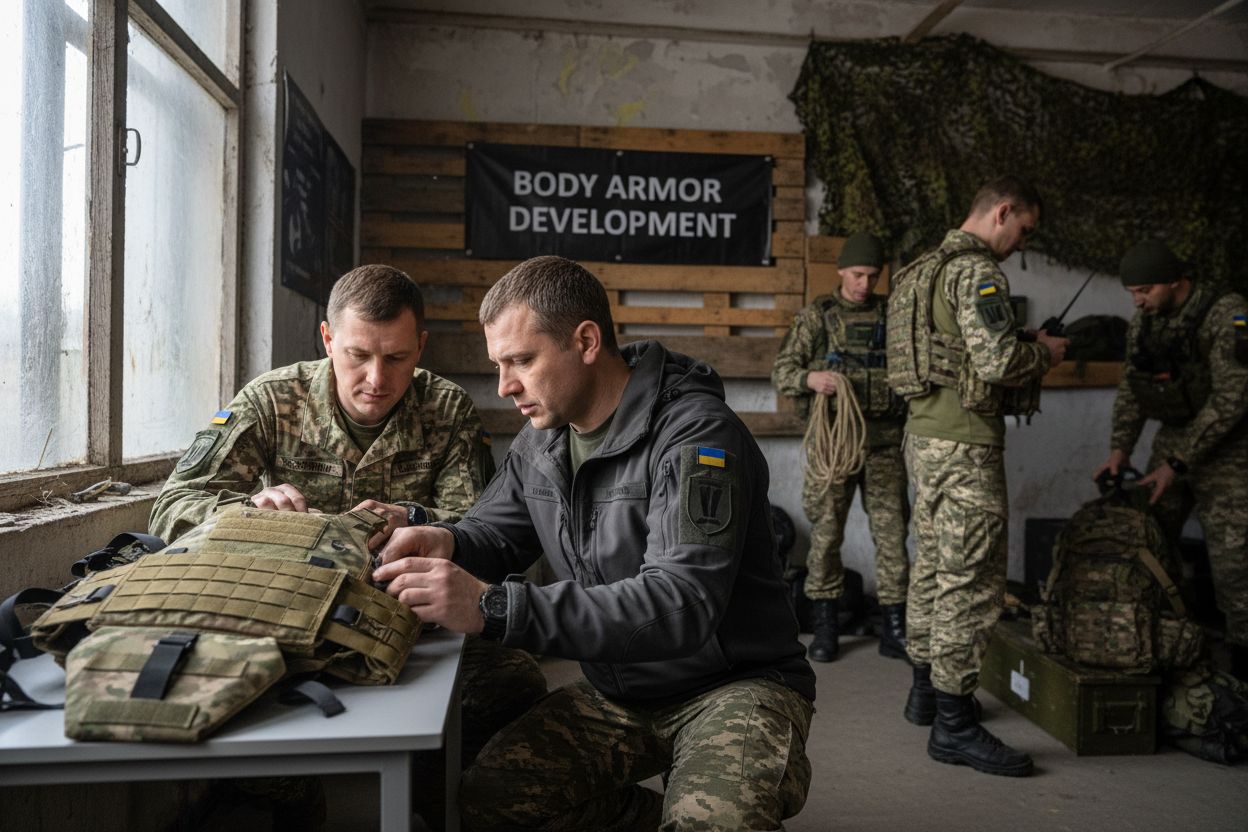


Explore body armor development in Ukraine conflict and gain a comprehensive understanding of its importance, technology, and impact.
Military body armor has become the ultimate safeguard for soldiers facing unpredictable threats on the battlefield. You might think thick vests are enough protection for modern troops, but recent studies show that advanced body armor has reduced combat fatalities by up to 70 percent in active conflict zones. The real surprise is that these innovations are not just about stopping bullets—they have started to reshape how entire armies fight and survive in war.
Key Materials And Technology Used In Body Armor
Advanced Protective Materials
Technological Integration And Smart Protection
The Evolution Of Body Armor During The Ukraine Conflict
Rapid Domestic Production And Technological Adaptation
Technological Innovations Under Combat Conditions
Real-World Applications And Effectiveness Of Body Armor
Performance Metrics And Survivability
Operational Adaptability And Threat Mitigation
Future Trends In Body Armor Development Amidst Ongoing Conflict
Emerging Material Science Innovations
Smart Integration And Technological Convergence
Quick Summary
Takeaway | Explanation |
|---|---|
Body armor enhances soldier survival rates. | Modern systems significantly reduce the chances of fatal injuries in combat, showcasing their critical role. |
Advanced materials improve body armor effectiveness. | High-strength fibers and ceramics provide multi-threat protection while keeping weight manageable for soldiers. |
Modular designs allow quick adaptation in combat. | Body armor can be customized rapidly to meet evolving threats in varied environments, enhancing operational flexibility. |
Emerging technologies transform body armor features. | Innovations like nanotechnology and integrated sensors are revolutionizing body armor, making it smarter and more effective. |
Ukraine conflict accelerates body armor innovation. | The urgent need for advanced protection has led to rapid advancements in design and technology under combat conditions. |
The Importance of Body Armor in Modern Warfare
Body armor represents a critical technological advancement in protecting military personnel from increasingly complex ballistic threats. The evolution of body armor in modern warfare reflects a continuous effort to minimize combat fatalities and enhance soldier survivability. Military research demonstrates that modern body armor systems have dramatically reduced mortality rates in conflict zones.
Protecting Human Life in Combat Environments
The primary function of body armor extends far beyond simple physical protection. In contemporary warfare, body armor serves as a comprehensive defense mechanism that shields soldiers from multiple threat types including:
Ballistic projectiles from small arms
Fragmentation from explosive devices
Shrapnel and high-velocity debris
Blunt force trauma during combat scenarios
Modern body armor systems are engineered to distribute and dissipate kinetic energy, significantly reducing the potential for severe injury. By strategically absorbing and dispersing impact forces, these protective systems can prevent life-threatening wounds that would have been fatal in previous military conflicts.
Technological Innovation of Military Body Armor
Advanced body armor development involves intricate material science and engineering. Manufacturers continuously push boundaries by integrating cutting-edge materials like high-strength aramid fibers, ceramics, and composite plates. Research from strategic defense institutions indicates that these innovations have increased protection levels while simultaneously reducing overall weight and improving mobility.
The most effective body armor systems now provide multi-threat protection, capable of stopping different caliber rounds and fragmenting explosives while maintaining flexibility for soldiers. This adaptability is crucial in modern warfare, where combat environments can rapidly shift between urban, desert, and mountainous terrains.
For those interested in understanding how body armor plays a critical role in personal protection, read our comprehensive guide on active shooter scenarios to gain deeper insights into protective technologies and their real-world applications.
Key Materials and Technology Used in Body Armor
The technological landscape of body armor continues to evolve, driven by complex engineering challenges and the urgent need to protect human life in high-risk environments. Modern body armor represents a sophisticated fusion of advanced materials science, ballistic engineering, and ergonomic design. Defense technology experts highlight that contemporary body armor solutions go far beyond traditional protective mechanisms.
Advanced Protective Materials
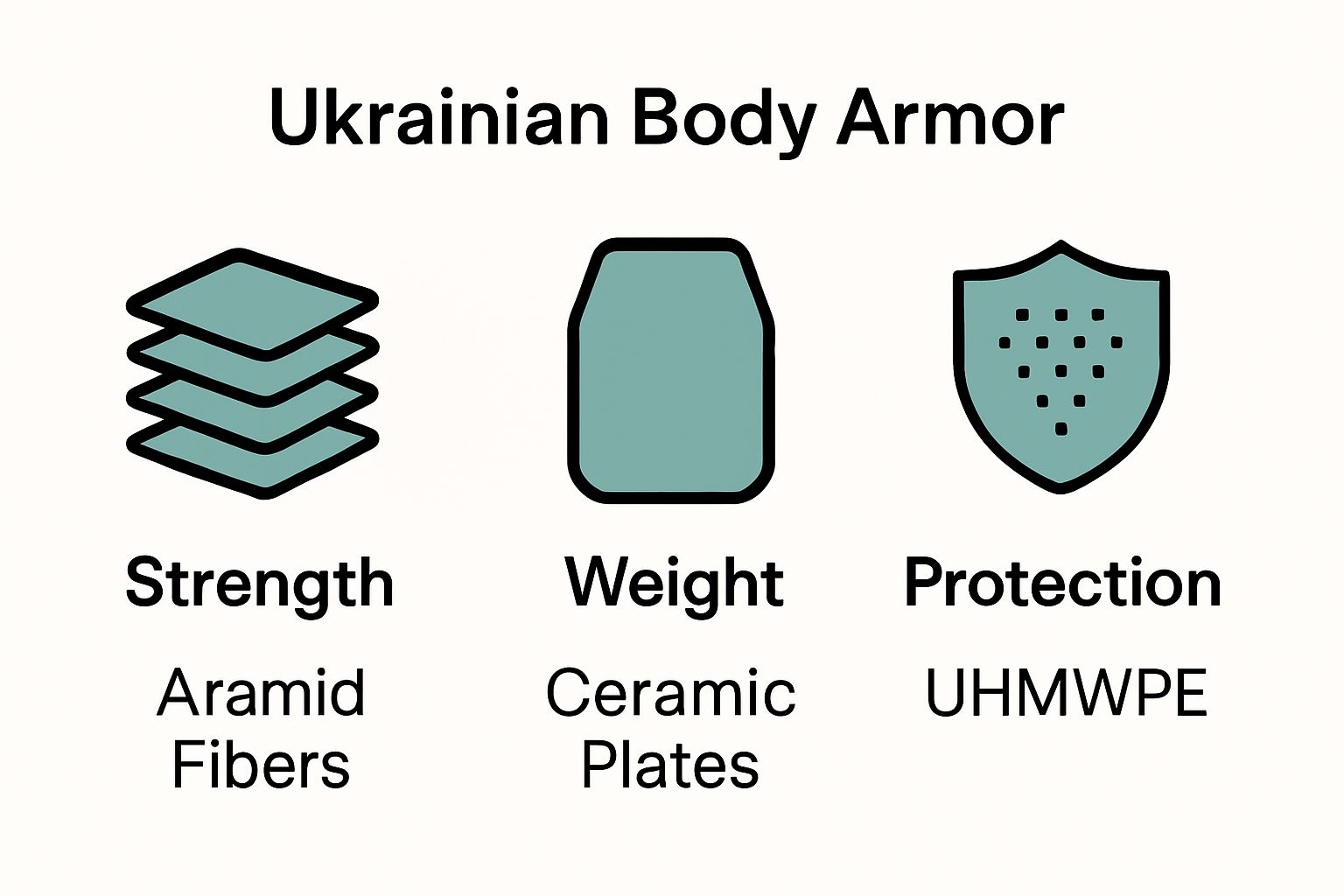
The core of body armor technology lies in its fundamental materials. High-performance fibers like aramid (Kevlar) and ultra-high-molecular-weight polyethylene (UHMWPE) form the backbone of modern protective systems. These materials offer exceptional strength-to-weight ratios, enabling manufacturers to create lightweight yet incredibly robust protective gear.
Key characteristics of advanced protective materials include:
Exceptional tensile strength
High energy absorption capabilities
Resistance to environmental degradation
Minimal weight impact on user mobility
Ceramic plates represent another critical technological advancement. These plates, often composed of alumina or boron carbide, provide superior protection against high-velocity rifle rounds by fragmenting and dispersing kinetic energy upon impact.
Technological Integration and Smart Protection
Modern body armor transcends passive protection by incorporating intelligent design principles. Emerging research demonstrates the integration of nanotechnology and responsive materials that can adapt to environmental conditions and threat levels.
Innovative technologies now enable body armor systems to:
Monitor physiological stress indicators
Provide real-time temperature regulation
Offer modular protection configurations
Enable rapid threat response mechanisms
For those interested in exploring the intricate world of body armor materials, our comprehensive guide on material types provides deeper insights into the science behind protective technologies.
The ongoing challenge for body armor designers remains balancing maximum protection with minimal user encumbrance. By continuously pushing technological boundaries, manufacturers aim to create solutions that not only protect but also enhance soldier performance and survivability in dynamic combat environments.
This table summarizes the key advanced materials and technologies currently used in modern body armor, highlighting their main characteristics and protective benefits.
Material / Technology | Main Characteristics | Protective Benefits |
|---|---|---|
Aramid Fibers (Kevlar) | High tensile strength, low weight | Blunt trauma, bullet resistance |
UHMWPE | Exceptional strength-to-weight ratio | Stops rifle rounds, lightweight |
Ceramic Plates | Hard, brittle, fractures on impact | Rifle/armor-piercing round resistance |
Composite Plates | Multi-material layers, flexible | Balanced protection, mobility |
Nanotechnology Integration | Responsive, smart materials | Adjusts protection to environment/threat |
Integrated Sensors | Real-time monitoring, modular attachment | Monitors physical status/threats, fast alert |
The Evolution of Body Armor During the Ukraine Conflict
The Ukraine conflict has served as a critical proving ground for body armor technologies, demonstrating unprecedented rapid adaptation and innovation in personal protective equipment. Military analysts from defense research institutions highlight how the conflict has fundamentally transformed understanding of body armor design and deployment in modern asymmetric warfare.
Rapid Domestic Production and Technological Adaptation
Ukrainian military forces quickly recognized the urgent need for advanced protective gear in the early stages of conflict. Initial challenges included limited domestic manufacturing capabilities and reliance on outdated Soviet-era body armor systems. The response was a remarkable surge in domestic production, with Ukrainian manufacturers rapidly developing and deploying new body armor configurations.
Key characteristics of this rapid adaptation included:
Accelerated design and prototype development
Leveraging civilian and volunteer manufacturing networks
Rapid integration of battlefield feedback into armor designs
Modular armor systems allowing quick customization
The standard Ukrainian body armor, such as the Korsar-M3, emerged as a testament to this innovative approach. These vests feature multi-layered aramid inserts providing enhanced protection against various ballistic threats while maintaining critical mobility for soldiers.
Technological Innovations Under Combat Conditions
Research from international defense technology journals indicates that the Ukraine conflict has driven unprecedented technological innovations in body armor. Manufacturers have developed increasingly sophisticated systems that address multiple threat types, from small arms fire to fragmentation and explosive devices.
Significant technological advancements include:
Enhanced ceramic plate designs
Improved weight distribution mechanisms
Integration of lightweight composite materials
Advanced thermal and ballistic performance
For those interested in understanding the specific body armor configurations used in this conflict, our comprehensive guide provides detailed insights into the technological landscape.
The ongoing conflict continues to demonstrate that body armor is no longer just protective equipment but a critical technological system that directly impacts military effectiveness and soldier survivability.
To help clarify the differences, the following table compares key characteristics of traditional body armor versus modern systems developed and refined during the Ukraine conflict.
Feature | Traditional Body Armor | Modern Body Armor in Ukraine Conflict |
|---|---|---|
Primary Materials | Outdated steel or heavy fibers | Advanced aramid, ceramics, composites |
Weight | Heavy, cumbersome | Lightweight, mobility-focused |
Threat Protection | Limited (mainly against handguns) | Multi-threat (rifle, fragmentation, IEDs) |
Modularity | Fixed design | Highly modular, quick customization |
Production Speed | Slow, centralized | Rapid, collaborative, domestic adaptation |
Technological Integration | Minimal | Smart features: sensors, thermal regulation |
Operational Flexibility | Low | High—adapted for urban, rural, varied roles |
Real-World Applications and Effectiveness of Body Armor
Body armor represents a complex technological solution with profound implications for human survival in high-risk environments. Medical research from trauma centers demonstrates that modern body armor significantly reduces the probability of fatal injuries by mitigating the impact of ballistic and fragmentation threats.
Performance Metrics and Survivability
Effectiveness measurements go beyond simple material resistance, encompassing comprehensive performance indicators that evaluate protection across multiple dimensions. These metrics include:
Blunt trauma reduction capabilities
Penetration resistance
Energy absorption rates
Weight and mobility preservation
Thermal management characteristics
Empirical studies consistently show that well-designed body armor can reduce potentially fatal torso injuries by up to 70% in combat scenarios. The standard NIH protection protocols evaluate body armor through rigorous testing that simulates real-world combat conditions, ensuring soldiers receive credible and reliable protection.
Operational Adaptability and Threat Mitigation
Modern body armor transcends traditional protective paradigms by offering adaptable protection systems that respond dynamically to evolving threat landscapes. Military engineering research highlights the importance of modular designs that allow rapid reconfiguration based on specific mission requirements.
Key operational considerations include:

Compatibility with mission-specific equipment
Quick-release mechanisms
Integrated communication and sensor technologies
Rapid thermal regulation capabilities
For insights into specialized body armor configurations for different professional contexts, our comprehensive guide offers detailed perspectives on tailored protective solutions.
Ultimately, body armor represents more than equipment it is a critical life-preservation technology that bridges advanced materials science with human protection strategies. The ongoing evolution of these systems continues to push boundaries of what is possible in personal protective technologies.
Future Trends in Body Armor Development Amidst Ongoing Conflict
The current geopolitical landscape has accelerated body armor technological innovation at an unprecedented pace, transforming protective equipment from passive defense mechanisms into sophisticated, intelligent systems. Defense technology experts predict a radical transformation in body armor design driven by emerging technological paradigms and battlefield requirements.
Emerging Material Science Innovations
Nanotechnology and advanced composite materials are revolutionizing body armor development. Researchers are exploring groundbreaking materials that offer superior protection while dramatically reducing weight and enhancing flexibility. These next-generation materials include:
Graphene-based composites
Self-healing polymers
Adaptive ceramic nanomaterials
Biomimetic structural designs
The potential of these materials extends beyond traditional ballistic protection, offering capabilities like enhanced thermal regulation, energy dissipation, and even electromagnetic shielding. Intelligent material systems can potentially adapt in real-time to different threat environments, representing a quantum leap in protective technology.
Smart Integration and Technological Convergence
Military research institutions are developing body armor systems that transcend traditional protective functions. Future body armor will likely incorporate advanced sensor technologies, biometric monitoring, and integrated communication systems.
Key technological convergence trends include:
Embedded physiological monitoring sensors
Real-time threat detection capabilities
Augmented reality interface integration
Automated environmental adaptation mechanisms
For comprehensive insights into emerging body armor technologies, our specialized guide offers an in-depth exploration of cutting-edge protective solutions.
The ongoing Ukraine conflict has dramatically accelerated these technological developments, demonstrating that body armor is no longer just protective equipment but a complex, adaptive technological ecosystem that directly influences operational effectiveness and soldier survivability.
Achieve Advanced Protection Inspired by Real-World Innovation
The article highlights how unpredictable threats and rapid innovation have transformed the standards of modern protective equipment. Many professionals and security-conscious individuals now face similar challenges: adapting quickly to evolving risks, ensuring maximum mobility without sacrificing protection, and relying on proven technologies like advanced materials and modular configurations described in the article.
At AcelinkArmor.com you can turn lessons from the Ukraine conflict into everyday readiness. Our selection of body armor solutions reflects the latest advancements in ballistic technology with options for law enforcement, military, and civilians who demand serious protection. Explore our armor plates page for lightweight yet powerful inserts or browse our tactical gear collection to build a system that responds dynamically to your unique environment. Take the next step now and secure your advantage with high-compliance gear trusted in the world’s most demanding conditions.
Frequently Asked Questions
What advancements have been made in body armor technology during the Ukraine conflict?
The Ukraine conflict has accelerated innovations in body armor, with manufacturers creating systems that offer enhanced protection against various threats, incorporating materials like advanced ceramics and composites, and designing modular systems for improved adaptability in combat situations.
How has the production of body armor evolved in response to the conflict?
The conflict prompted rapid domestic production of body armor in Ukraine, leveraging civilian and volunteer manufacturing networks to develop new configurations quickly, leading to innovative designs like the Korsar-M3 vest, which features multi-layered aramid inserts for improved ballistic protection.
What are the key characteristics of modern body armor used in combat?
Modern body armor is designed to be lightweight yet strong, featuring materials like aramid fibers and ceramics for superior protection against ballistic threats, while also incorporating advanced technologies for thermal regulation and adaptability to various combat environments.
How does body armor impact soldier survivability in combat?
Modern body armor significantly reduces the risk of fatal injuries by up to 70% in combat scenarios by effectively mitigating the impact of ballistic and fragmentation threats, allowing soldiers to perform more effectively in high-risk environments.
Recommended
Understanding The Role of Body Armor in Active Shooter Scenarios - Ace Link Armor
Essential Body Armor Buying Tips for Personal Protection - Ace Link Armor
Body armor heat management - Why Heat Is the Hidden Enemy - Ace Link Armor
Related reading: The Best Gift For Police Officer