Comprehensive guide to fake body armor claims, false protection standards, real certification, identifying misinformation, and ensuring verified safety.
Key Takeaways
Marketing terms like “bulletproof” should be checked against documented testing and product specifications.
NIJ certification, compliant product listings, and transparent threat ratings help buyers avoid misleading claims.
Suspiciously vague armor descriptions are a warning sign, especially when no test standard is named.
Buyers should compare materials, stated threat level, warranty, and documentation before purchase.
How This Fits Into Your Buying Decision
Use this article as one step in a larger buyer path. Start with Main Criteria When Choosing the Best Body Armor, then compare Understanding Body Armor Material Types and Body Armor Fit: Weight, Flexibility & Protection before choosing equipment.
Did you know that millions of dollars have been lost in lawsuits over fake body armor claims? Choosing the right protective gear is not just a matter of comfort or preference. Your safety depends on separating fact from fiction in a crowded market filled with bold promises and confusing jargon. With the right knowledge, you can spot false protection claims and trust your body armor to provide real, life-saving defense when it matters most.
Key Takeaways
Point | Details |
|---|---|
Understanding Misconceptions | Recognize that many body armor claims are exaggerated and not all products offer total protection from various threats. |
Verification is Essential | Always ensure that body armor products are independently tested and certified to verify performance capabilities. |
Awareness of Risks | Unverified claims can lead to potentially fatal failures and significant financial losses, underscoring the importance of due diligence in purchasing decisions. |
Regular Inspections Required | Conduct thorough inspections and validate certification documents regularly to maintain safety compliance and ensure equipment integrity. |
Defining Fake Body Armor Claims and Misconceptions
The body armor industry is plagued by misleading narratives that can dangerously compromise user safety. Fake claims often emerge from manufacturers seeking competitive advantage through exaggerated performance promises. According to the Body Armor Buying Tips guide, understanding these misconceptions is critical for making informed protective gear decisions.
According to the National Institute of Justice (NIJ), many fake body armor claims revolve around unrealistic protection capabilities. Common misconceptions include:
Total bullet-proof protection across all calibers
Guaranteed protection against multiple weapon types
Unlimited durability without maintenance
Universal effectiveness regardless of wear conditions
Professional body armor buyers must recognize that legitimate protection requires verified certification standards. The NIJ emphasizes that soft body armor has specific limitations - it cannot protect against rifle ammunition or edged weapons. Professional users need comprehensive understanding of material strengths, testing protocols, and precise protection levels to make responsible equipment selections.
Critical research demonstrates that fake claims not only mislead consumers but potentially endanger lives. Rigorous testing, transparent manufacturing processes, and adherence to established ballistic standards represent the only reliable path to genuine body armor protection. Always demand comprehensive documentation and independent verification before investing in personal safety equipment.
Common Types of False Protection Claims
The landscape of body armor fraud is complex and multifaceted, with manufacturers employing various deceptive tactics to misrepresent product capabilities. According to a federal investigation, material types and testing standards play a critical role in identifying these fraudulent claims. Manufacturing Origin Fraud represents one of the most prevalent false protection claims. As documented by government sources, some companies deliberately misrepresent product origins to circumvent quality standards. A notable case involved a Washington State manufacturer who marketed low-quality ballistic equipment produced in China while falsely claiming U.S. manufacturing and safety compliance.
Key false protection claims include:
Misrepresenting ballistic protection levels
Fabricating material durability ratings
Faking international safety certifications
Concealing material degradation risks
Overstating performance under diverse environmental conditions
The Toyobo Co. Ltd. case dramatically illustrates the potential consequences of false claims. The company agreed to pay $66 million for selling defective Zylon fiber for bulletproof vests, knowingly marketing a material that rapidly degraded and was unsuitable for ballistic protection. This case underscores the critical importance of independent testing, transparent manufacturing processes, and rigorous quality control in body armor production.
Here’s a comparison of legitimate body armor features versus fake protection claims:
Aspect | Legitimate Body Armor | Fake Protection Claims |
|---|---|---|
Certification | NIJ-certified Independent lab tested | No/forged certification Unverifiable standards |
Documentation | Transparent Comprehensive Publicly available | Vague Hidden Incomplete |
Testing Protocols | NIJ protocols Environmental durability tests | None claimed Fake or irrelevant tests |
Material Claims | Detailed specs Disclosed weaknesses | Exaggerated strength No limitations stated |
Manufacturer Origin | Verified Matches documentation | Falsified Misrepresented country |
Durability Promises | Limited, with care requirements | Unlimited/no maintenance needed claims |
Professional buyers must remain vigilant, demanding comprehensive documentation, independent verification, and transparent testing data.
By understanding these common fraudulent tactics, users can make informed decisions that prioritize genuine safety and reliable protection.
Industry Certification and Testing Standards Explained
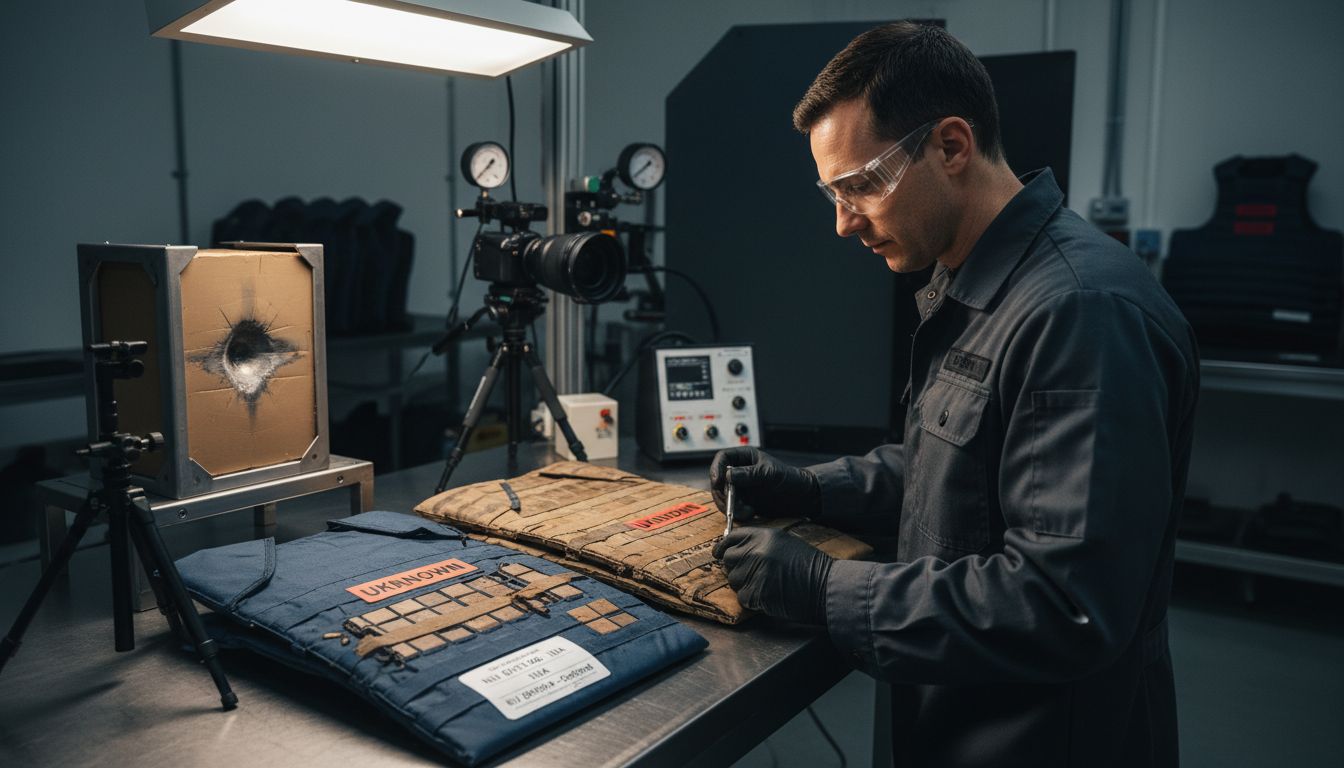
Understanding body armor certification requires navigating a complex landscape of rigorous testing protocols and industry standards. Body Armor Buying Tips emphasize the critical importance of recognizing legitimate testing methodologies that ensure genuine protective capabilities. According to the National Institute of Standards and Technology (NIST), body armor testing involves sophisticated evaluation techniques. The standard testing procedure includes mounting armor on a clay block and precisely firing bullets to measure potential deformations, ensuring the material remains within acceptable safety limits.
These meticulous assessments help determine whether a body armor product can truly protect against specific ballistic threats.
Key certification standards include:
NIJ Protection Level Ratings
Independent Laboratory Verification
Comprehensive Ballistic Performance Documentation
Environmental Durability Testing
Material Integrity Assessments
The NIJ Compliance Testing Program demonstrates the industry’s commitment to safety by actively removing armor models from its Compliant Products List when criminal activities involving counterfeit or mislabeled body armor are discovered. This proactive approach underscores the ongoing challenges in maintaining rigorous protection standards and protecting end-users from potentially dangerous equipment.
Professional buyers must approach certification with a critical eye, demanding transparent documentation, independent testing results, and clear performance specifications. By understanding these intricate testing standards, users can make informed decisions that prioritize genuine protection and personal safety.
Risks of Believing Unverified Body Armor Claims
Believing unverified body armor claims can lead to catastrophic consequences that extend far beyond financial loss. Understanding these risks is crucial for anyone considering personal protective equipment. Advanced Body Armor: Protection Explained highlights the critical importance of thoroughly verifying equipment performance before deployment.
The devastating potential of unverified body armor becomes starkly evident through documented industry cases. Lincoln Fabrics Ltd., for instance, settled a $4 million lawsuit for producing Zylon fabric bulletproof vests that rapidly lost ballistic capabilities, particularly when exposed to heat and humidity. This case demonstrates how seemingly minor material degradation can transform life-saving equipment into a potentially fatal liability.
Key risks associated with unverified body armor claims include:
Potential fatal protection failures during critical moments
Significant financial losses from purchasing ineffective equipment
Legal liability for professional users providing substandard protection
Compromised personal and team safety
Reduced operational effectiveness in high-stakes environments
Professional users must recognize that unverified claims represent more than simple marketing hyperbole - they represent genuine threats to human life. Comprehensive testing, independent verification, and rigorous material assessment remain the only reliable methods for ensuring genuine protective capabilities. The cost of skepticism is minimal compared to the potential consequences of misplaced trust in unproven body armor technology.
How to Verify Authentic Body Armor Products
Verifying the authenticity of body armor requires a systematic and meticulous approach that goes beyond surface-level examination. NIJ.07 Levels of Protection provides critical insights into the essential steps professionals must take to ensure their protective equipment meets rigorous safety standards.
According to the National Institute of Justice (NIJ), users must conduct regular and comprehensive inspections to confirm their body armor remains unimpaired. This involves examining the armor for:
Visible physical damage or structural compromises
Material degradation or unusual wear patterns
Certification documentation and authenticity markers
Manufacturer’s original quality seals
Compliance with current NIJ protection standards
Professional verification requires multiple layers of authentication. Law enforcement agencies are advised to select body armor that explicitly complies with NIJ standards, understanding both its performance capabilities and inherent limitations. This means requesting and thoroughly reviewing:
Original manufacturer certification documents
Independent laboratory testing reports
Detailed material composition specifications
Environmental durability test results
Comprehensive ballistic performance documentation
Technical verification is not just a recommendation - it’s a critical safety protocol. Professionals must treat body armor authentication as a life-or-death responsibility, leaving no room for assumptions or shortcuts in the verification process.
Frequently Asked Questions
What are common misconceptions about body armor protection?
Many misconceptions include beliefs that body armor is totally bulletproof against all calibers, guarantees protection against various weapon types, requires no maintenance, and is effective under all wear conditions. Understanding these limitations is crucial for making informed purchases.
How can I verify the authenticity of body armor products?
To verify authenticity, inspect for visible damage, check certification documentation, and request original manufacturer certification documents, independent laboratory testing reports, and environmental durability test results.
What are the risks of believing unverified body armor claims?
Believing unverified claims can lead to grave risks, including the possibility of fatal protection failures, significant financial loss, legal liability for inadequate protection, compromised safety, and ineffective performance in high-stakes situations.
What role do certification standards play in body armor safety?
Certification standards, such as NIJ protection level ratings and independent laboratory verification, are critical in ensuring that body armor meets rigorous safety requirements and performs effectively against specific ballistic threats.
Recommended
Essential Body Armor Buying Tips for Personal Protection - Ace Link Armor
Female Body Armor - Choose Right Protection - Ace Link Armor
Recommended Product Path
Use this product path as a starting point, then confirm sizing, protection level, documentation, and lawful use before buying: NIJ-rated body armor; soft armor panels; hard armor plates.
Continue Reading
These guides help answer the next questions a buyer usually has after this topic.